
Business and Leadership
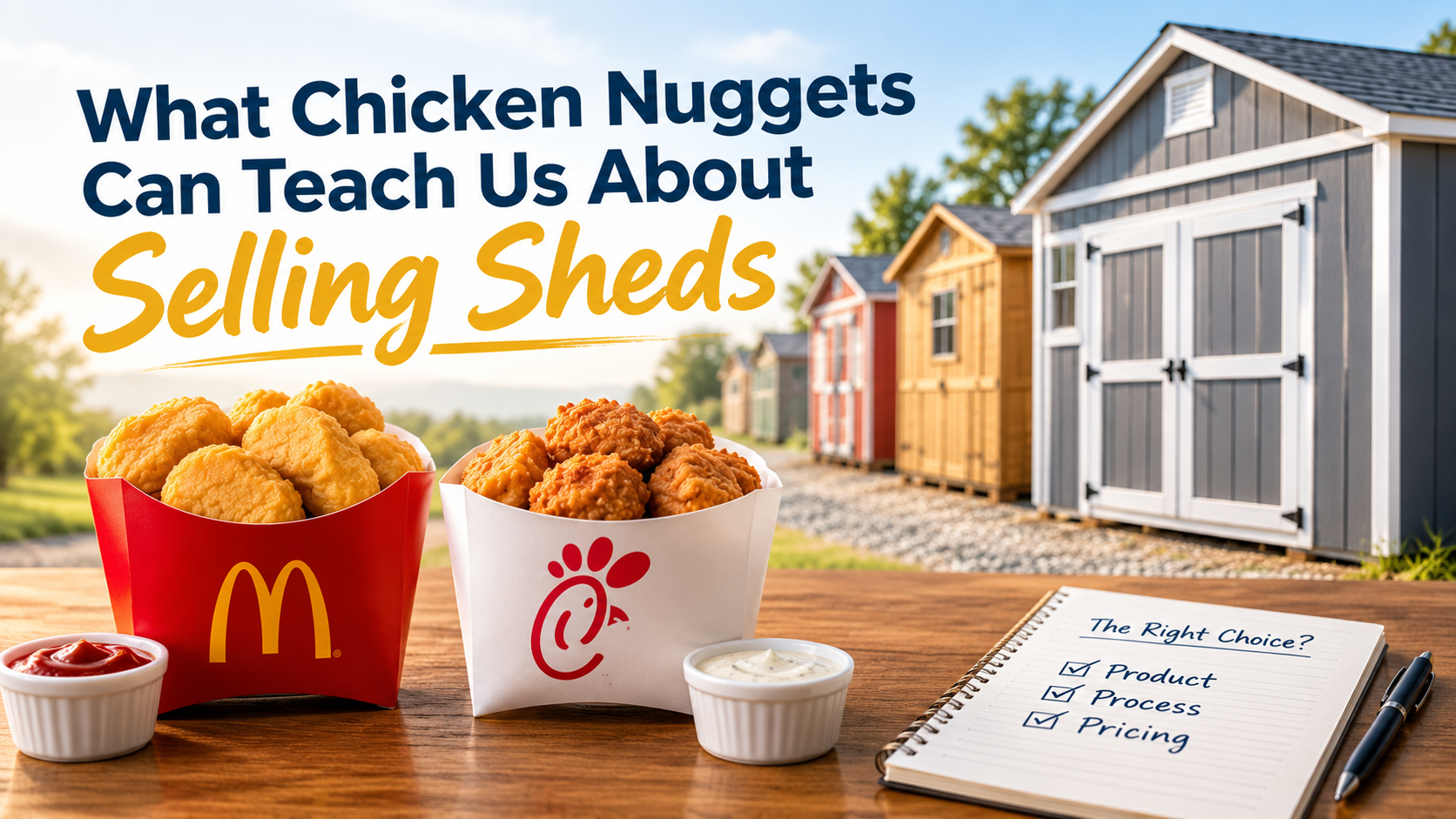
What Chicken Nuggets Can Teach Us About Selling Sheds
The shed business has become increasingly competitive. In many markets, customers have more companies to choose from, and the products can look remarkably similar. Most companies offer a variety of sizes, colors, and options. Most promote quality construction, competitive pricing, and good customer service. So when a customer compares three or four shed companies, what gives them a compelling reason to choose one over the others? If customers struggle to identify meaningful differences, the decision often comes down to price, convenience, or familiarity.
For shed business owners who want to build a healthy, profitable company, this raises an important question: How will you differentiate your business from the competition?
You Can't Be Everything to Everyone
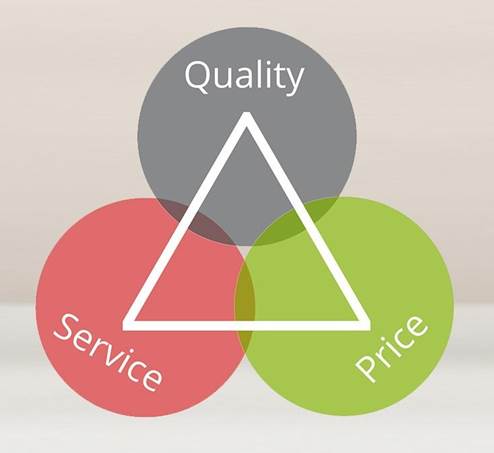
Many business owners are familiar with the traditional Venn diagram illustrating the relationship between price, quality, and service. The concept suggests that a business can excel in two areas but will struggle to maximize all three. A company competing on price may need to simplify its product line or limit customization. A company offering premium quality and exceptional service will likely need to charge more to support the additional costs.
This is a strategic illustration rather than an absolute rule. Better systems, purchasing power, and operational efficiency can sometimes improve all three. But the underlying principle remains valuable: Every business makes choices about how it will compete, whether those choices are intentional or not.
Differentiation doesn't necessarily mean inventing a product nobody else offers. It means identifying what matters most to a particular group of customers and designing your business to serve those customers exceptionally well. In the shed business, there are three primary areas to consider: the product you sell, the process through which you sell and deliver it, and the way you price your offering.
Product Differentiation: What Are You Selling?
Some shed companies differentiate through premium materials, distinctive designs, superior craftsmanship, or extensive customization. Others specialize in a particular market, such as backyard storage, hobby buildings, or agricultural applications.
There is also an opportunity to differentiate through simplicity. While some customers appreciate dozens of choices, others find too many options confusing. A company offering a carefully selected collection of popular models, clear packages, and straightforward options may appeal to customers who simply want a good shed without navigating a complicated buying process.
More choices do not automatically create more value. Sometimes the better product is the one that makes the right choice easier.
The key is understanding what your ideal customers genuinely value. Are they looking for the lowest initial investment, superior durability, attractive design, or customization? The answers should influence not only what you build but also how you sell and price it.
Process Differentiation: How Easy Are You to Do Business With?
While product differentiation is important, I believe one of the greatest opportunities for shed companies lies in differentiating the buying experience.
Customers are not simply purchasing a building. They are navigating a process that can involve selecting a model, understanding pricing, determining property restrictions, securing permits, preparing a site, arranging delivery, and coordinating installation.
Every step creates an opportunity to build confidence or create frustration. A company can build an excellent shed and still deliver a disappointing customer experience. Perhaps the customer receives an unclear quote, discovers unexpected site-preparation requirements, or struggles to get an answer about delivery.
Now imagine a company that approaches the process differently. It helps customers select the right building, explains costs upfront, provides clear site-preparation instructions, communicates realistic timelines, and coordinates delivery and installation with minimal surprises. When questions arise, someone takes ownership and helps resolve them.
Both companies may sell sheds of similar quality, but the second offers something more: confidence, clarity, and relief from hassle.
Making the process easy requires more than friendly salespeople. Sales, production, scheduling, delivery, installation, and customer service must work together. Information gathered during the sales process must reach the people fulfilling the order. Customers should not have to repeatedly explain their situation or figure out which department is responsible for solving a problem.
Convenience is not merely a service feature; it can be a competitive strategy.
Pricing Differentiation: More Than Being the Cheapest
Competing on price is one possible strategy, but it isn't the only way to make your offering attractive. The more important question is whether your pricing model reflects the value your target customers want.
Consider the difference between offering a shed at an attractive starting price and offering a complete package that includes delivery, installation, and clearly defined site-preparation requirements. The first may appeal to customers comfortable managing some of the work themselves. The second may appeal to customers willing to pay more to avoid coordinating multiple steps.
Other approaches include good-better-best packages, transparent pricing, financing options, and clearly defined upgrade packages. These models help customers understand their choices and select an option that fits their needs and budget.
The goal isn't simply to charge more. It is to make the value clear. Some customers want the lowest-cost shed; others want a premium product and a complete service experience. Understanding these differences helps you serve the right customers without forcing everyone into the same package.
A Lesson from McDonald's and Chick-fil-A
One of my favorite ways to think about differentiation comes from an unlikely place: chicken nuggets.
McDonald's Chicken McNuggets are formed from processed chicken meat, producing a relatively consistent texture. Chick-fil-A's nuggets are made from pieces of chicken breast, providing a more recognizable whole-piece chicken experience.
As a father, I noticed that some of my children preferred foods with a consistent texture. They weren't interested in unexpected chewy pieces, gristle, or what we called “waggys” in a piece of meat. They were much more comfortable with hamburger or the predictable texture of McDonald's nuggets. My theory is that many children share this preference, although individual tastes certainly vary. Meanwhile, other customers prefer the recognizable pieces of chicken offered by Chick-fil-A.
Neither preference is inherently right or wrong. The important point is that a feature one customer values may be a drawback to another. Consistency can be reassuring to one person and unappealing to another.
The same principle applies to sheds. Some customers want a straightforward, affordable building that meets their needs without requiring many decisions. Others want a premium structure with distinctive design, customization, and craftsmanship. Some want to manage every detail; others want someone else to handle the entire process.
A shed company doesn't need to be the best choice for every customer. It needs to understand which customers it wants to serve and build an offering that is particularly attractive to them. Differentiation begins when you stop asking how to appeal to everyone and start asking how to become the obvious choice for the right customers.
Make the Entire Process Easy
Of the different ways a shed company can differentiate itself, I increasingly believe that making the entire process easy may offer one of the greatest opportunities.
Think about the decisions and potential obstacles involved in buying a shed. Does the customer understand the options and total cost? Do they know whether permits or property restrictions apply? Have they been told what must happen before delivery? Do they know whom to contact if something changes?
Each unanswered question creates work for the customer. Each unclear handoff introduces the possibility of a misunderstanding. Each surprise can undermine confidence.
A company that systematically removes these obstacles creates a different kind of value. Clear packages reduce confusion. Proactive communication eliminates uncertainty. Well-designed scheduling and installation processes reduce frustration. When problems occur, employees take ownership rather than passing responsibility between departments.
This approach can benefit the business as much as the customer. Better processes reduce errors, repeat trips, rework, and unnecessary phone calls. A smooth experience can generate referrals and give customers reasons to look beyond the lowest price.
Making the process easy doesn't mean promising everything to everyone. It means creating better systems, eliminating unnecessary steps, setting clear expectations, and ensuring employees know how to deliver the promised experience.
For companies using EOS, this is an opportunity to turn a strategic promise into a repeatable process. If being the easiest shed company to do business with is part of your differentiation, that commitment should influence your core processes, measurables, and employee accountability. It should be more than a slogan on your website.
What Will Make You the Obvious Choice?
Differentiation requires discipline. It is easy to claim that your company offers the best quality, service, prices, and buying experience. The challenge is building a business that consistently delivers on those promises while remaining profitable.
Start by identifying the customers you most want to serve and understanding what they value. Decide where your company can offer a meaningful advantage, then align your product, processes, pricing, and people around that choice. Measure whether customers recognize the difference through conversion rates, customer feedback, on-time installation, referrals, and profitability.
The goal isn't to be different in every possible way. It is to be meaningfully different in ways customers value and competitors find difficult to replicate.
Take this question to your next leadership team meeting: If a customer were comparing our company with three competitors offering a similar shed, what would give that customer a compelling reason to choose us? Would it be our product, our pricing, our process, or some combination of the three?
And if we want to be known as the easiest shed company to do business with, what would we need to change to make that promise a reality?
Don't try to be everything to everyone. Decide why the right customer should choose you—and then build your business to make that choice easy.
